Research Collaborations

The Simpson Center provides funding and administrative support each year for University of Washington faculty and graduate students in the humanities and humanistic social sciences to undertake collaborative research projects. Below, you can see the webpages for all our currently funded projects.

Faculty Research Collaborations include external and internal awards. Funders from outside the university provide major support for external awards; the Simpson Center, in hosting these awards, provides some administrative support and office space. Internal awards are supported through the Simpson Center's funding category, Collaborative Research Projects, Events, and Conferences. Both types of awards bring together people from different departments, disciplines, fields of expertise, and organizations who share common research interests. The pages below provide more detail about activities, events, and potential ways to engage with current projects.

Graduate Research Clusters (GRC) foster crossdisciplinary collaboration and inquiry among graduate students in the form of cross-departmental reading, screening, and/or discussion groups, dissertation working groups, public humanities programming, and other activities. Graduate students in the humanities at the University of Washington may join a GRC at any time during the academic year. To do so, please reach out to the primary contacts listed on the project page.

To learn about how to apply for these research collaboration opportunities, please see the call for proposals for Collaborative Research Projects, Events, and Conferences or Graduate Research Clusters. To see previously funded projects, you can visit our research collaboration archive.

External Awards
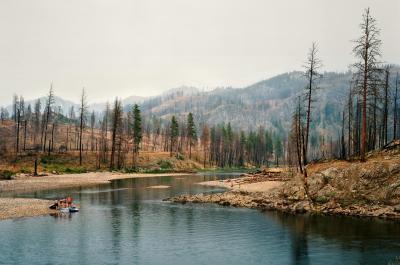
Fire Humanities is a project born out of the University of Idaho's Confluence Lab that aims to foster interdisciplinary inquiry into what it means to live well in a world with more fire and more smoke. As a complement to...
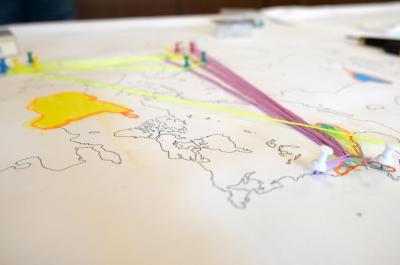
Global Asias: Pathways & Opportunities in Scholarship, Museums, Libraries & Communities is a three-year initiative that has been funded by a grant from the Henry Luce Foundation and is being hosted at the Simpson Center. The project will engage scholars...
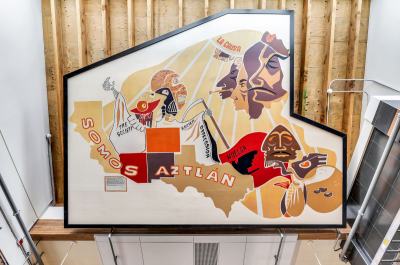
This project begins from a striking point on our own campus: a mural that depicts Washington being “set apart” from Oregon —a moment rooted in violence, dispossession, and the disruption of Coast Salish lands and relations. This artwork raises a...

Internal Awards

ALAA fosters scholarly and community conversations that guide the direction of research, teaching, and criticism in the field of Latin American and Latinx art. An affiliated society of the College Art Association, its triennial conference brings together scholars working across...
Film Festival + Scholar-Artist-Activist Talks + Community Discussion As the geopolitical, health, and environmental consequences of nuclear technology haunt our past, present, and future, how do we transmit knowledge about this heavy legacy, from one site to another, from one...
The Consciousness Hub project aims to launch a long-term collaborative network of University of Washington faculty from across the humanities, the arts, the social sciences, as well as the natural sciences and the Medical School, whose research focuses on consciousness...
The Global Antiquities and Early Modernities faculty research cluster is a cross-disciplinary consortium that cultivates research and collaboration in historical fields from across the humanities and humanistic social sciences departments at the University of Washington. This research group will bring...
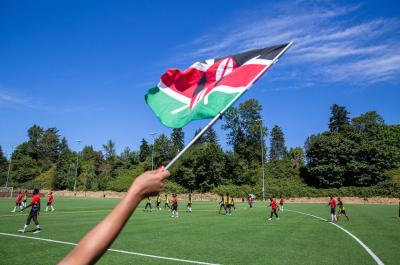
In recognition of the significant presence and impact of Horn-heritage communities in the Pacific Northwest, the UW Horn of Africa Initiative promotes research and teaching on the East African region that includes the countries of Ethiopia, Eritrea, Somalia, and Djibouti...
How do we use AI as humans in language, place, and space? While conversations about Generative AI are often dehumanizing, framing the technology as either savior or existential threat, we invoke what Bruce Clarke (2017) calls the posthuman imaginary: "from...
This research cluster is designed to build a network to support Latinx Studies research across departments on the three UW campuses. It aims to connect and build relationships and generate visibility for this field of study, which is often marginalized...
Despite the fact that sports are ubiquitous in everyday life, both in the United States and around the world, surprisingly little critical scholarship takes global sport seriously as a site of inquiry. Instead, global sport is often viewed in academia...
Software is generally understood as not having a “place,” or, conversely, having a place that does not matter to the way it functions. “Good software” is software that is supposed to run anywhere without glitches and bugs. Yet there is...
This cluster explores the application of relational, interdisciplinary methodologies to the study of cultural memory and its contestation at the nexus of nationalism, colonialism, and historical catastrophes. Invited lectures and colloquia of UW scholars support the development of a working...
Research on Equity-Oriented and Antiracist Writing Initiatives across the UW The UW's three campuses host multiple writing contexts, including first-year composition, writing across the curriculum, multilingual composition, and dual-enrollment. These distinct campus programs are linked by projects focused on linguistic...
Translating Colonialisms is a series of initiatives in Winter Quarter 2027 that explores the contributions, challenges, and provocations of Vicente Rafael’s scholarship. Rafael was a key figure in the fields of Colonial and Postcolonial Studies as well as Southeast Asian...
The West Coast Working Group on the Jews of the Maghrib (North Africa) and Middle East will bring together a small interdisciplinary group of faculty and graduate students to engage in deep reading and commentary on a small number (3-4)...

Graduate Research Clusters
Graduate research on Asia at the UW is distributed across—and siloed within—multiple departments. This issue is compounded by recent funding cuts to area studies and foreign language programs nationwide. The Asia Across Disciplines Graduate Research Cluster will build a layer...
Though the genealogy of state violence is not new, it is now occurring in an unprecedented era of technology; these actions — and more importantly, the public’s responses to them — are now able to be instantly documented and shared...
CMEMS seeks to foster collaboration between disciplines on topics concerning Classical and Late Antiquity, the Middle Ages, and the Early Modern period. The cluster brings together classicists, medievalists, and early modernists from diverse departments on campus and in the community...
This research cluster leverages environmental expertise at UW toward collaboration among graduate students of the College of Arts and Sciences and the College of the Environment. Members will build conversation across the environmental humanities, which encompasses the study of how...
What can rural worlds tell us about modernity? Comparative Rural Criticism re-centers the rural not simply as an object of study, but as a critical vantage point from which to rethink modernity itself. Even as scholarship has increasingly challenged linear...
The Digital Humanities Reading & Research Cluster brings together graduate students from across the humanities and information science to explore how digital tools can support humanistic research. The cluster's activities are structured around three objectives. First, to keep participants engaged...
This Graduate Research Cluster explores settler colonialism theory, anticoloniality, Indigenous resurgence, and Indigenous feminisms, seeking to create community in the interdisciplinary space of Indigenous Studies.
The Race, Privacy, and Sociotechnical Infrastructures research cluster brings together scholars from law, computing, the built environment, and critical design to understand the racialized distribution of privacy across digital, physical, and temporal space. Through collective reading, talks, and writing; the...
This research cluster focuses primarily on the technologies of settler-controlled state violence, dispossession, occupation, recognition, and contrasting sovereignties across the globe. Through research and collaboration, the following questions are explored: How does settler governance operate as a flexible system of...
This GRC brings together students from history, English, feminist studies, and other departments to explore influential and contemporary scholarship in cultural diaspora studies.