Society of Scholars

chairs against a blackboard

The Society of Scholars is an intellectual community of humanists of diverse generations, academic ranks, and departmental affiliations who contribute to and learn from one another’s work. Each year, approximately eight faculty and three dissertation research fellowships support members of the Society of Scholars. Scholars in year-long residence at the University of Washington may be invited to participate as well. The group meets biweekly throughout the year to discuss their research in progress. 

Apply for the Fellowship (Faculty)

Apply for the Fellowship (Student)

Cohort Archives

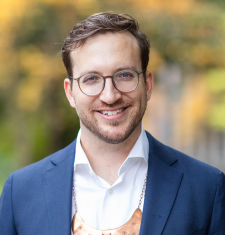
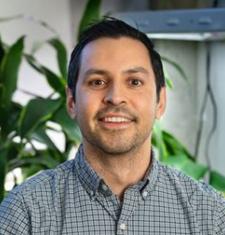
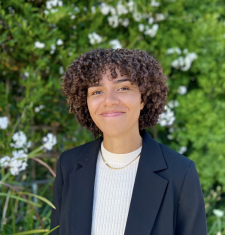
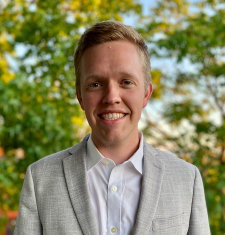
2026 - 2027 Society of Scholars
Vanessa Freije
Associate Professor
Jackson School of International Studies
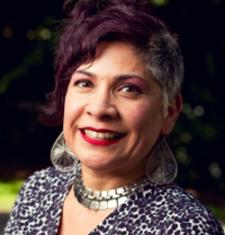
Portrait of Michelle Habell-Pallán
Professor
Gender, Women & Sexuality Studies
Amelia Lehosit
PhD Candidate
English
Annegret Oehme
Associate Professor
German Studies
Chrystel Oloukoï
Assistant Professor
Geography
Golden Owens
Assistant Professor
Cinema & Media Studies
Jonathan Radocay
Assistant Professor
English
Ila Ravichandran
Assistant Professor of Legal Studies
School of Interdisciplinary Arts and Sciences, UW Tacoma
Adam Romero
Associate Professor
School of Interdisciplinary Arts and Sciences, UW Bothell
Morgan P. Vickers
Assistant Professor
Law, Societies, & Justice
Chad Westra
PhD Candidate
History
Yumo Yan
PhD Candidate
Cinema & Media Studies
Anandi Bandyopadhyay
PhD Candidate
History
Laura Harris
PhD Candidate
Classics
Ishita Lahiri
PhD Candidate
English
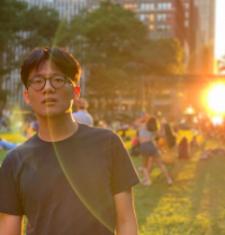
medium close-up of Yandong. He is on the left of the frame in a black t-shirt looking at the camera. To the right is a light flare form the setting sun, while the background shows buildings and a park.
Doctoral Candidate
Cinema & Media Studies
Sikose Sibabalwe Mjali
Graduate Student
English
Martin Schwartz
PhD Candidate
German Studies

2016 - 2017 Society of Scholars Fellow
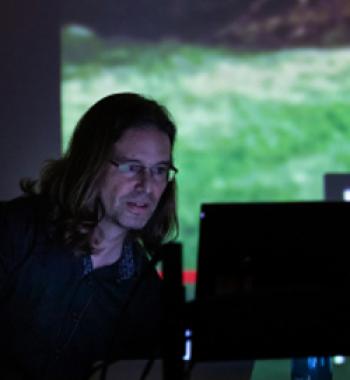
Stephen Groening looking at a computer monitor

Stephen Groening (he/him/his)

Associate Professor

Television and Collectivity

Television and Collectivity revisits a period when television was new and, much like contemporary digital media, shaped debates about political power and social change. I argue that a surprising range of postwar European philosophers responded to television as emblematic of an emergent era in which the simulation of reality and abolition of distance through the transmission of image and sound would bring new challenges to collectivity and therefore the power for groups to coalesce and act.