Society of Scholars

chairs against a blackboard

The Society of Scholars is an intellectual community of humanists of diverse generations, academic ranks, and departmental affiliations who contribute to and learn from one another’s work. Each year, approximately eight faculty and three dissertation research fellowships support members of the Society of Scholars. Scholars in year-long residence at the University of Washington may be invited to participate as well. The group meets biweekly throughout the year to discuss their research in progress. 

Apply for the Fellowship (Faculty)

Apply for the Fellowship (Student)

Cohort Archives

2026 - 2027 Society of Scholars
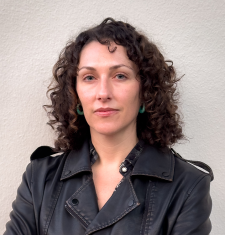
Vanessa Freije
Associate Professor
Jackson School of International Studies
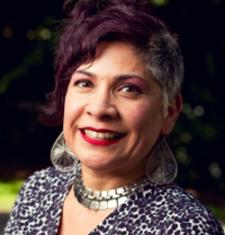
Portrait of Michelle Habell-Pallán
Professor
Gender, Women & Sexuality Studies
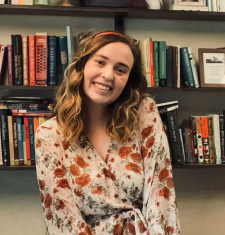
Amelia Lehosit
PhD Candidate
English
Annegret Oehme
Associate Professor
German Studies
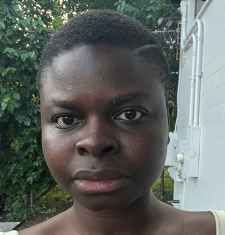
Chrystel Oloukoï
Assistant Professor
Geography
Golden Owens
Assistant Professor
Cinema & Media Studies
Jonathan Radocay
Assistant Professor
English
Ila Ravichandran
Assistant Professor of Legal Studies
School of Interdisciplinary Arts and Sciences, UW Tacoma
Adam Romero
Associate Professor
School of Interdisciplinary Arts and Sciences, UW Bothell
Morgan P. Vickers
Assistant Professor
Law, Societies, & Justice
Chad Westra
PhD Candidate
History
Yumo Yan
PhD Candidate
Cinema & Media Studies
Anandi Bandyopadhyay
PhD Candidate
History
Laura Harris
PhD Candidate
Classics
Ishita Lahiri
PhD Candidate
English
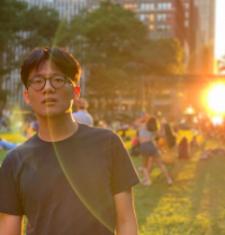
medium close-up of Yandong. He is on the left of the frame in a black t-shirt looking at the camera. To the right is a light flare form the setting sun, while the background shows buildings and a park.
Doctoral Candidate
Cinema & Media Studies
Sikose Sibabalwe Mjali
Graduate Student
English
Martin Schwartz
PhD Candidate
German Studies

2022 - 2023 Society of Scholars Fellow

Justin Randolph stands in front of a dark wall while wearing glasses and a white sweater.

Justin Randolph (he/him/his)

CHCI/ACLS Visiting Scholar and Assistant Professor

Mississippi Law

Mississippi Law tells a history of policing in rural America. For generations, Black Mississippians fought against the tandem of vigilante and state violence, lynch mob, and riot squad. Activists recognized law enforcement as a key piece of the Jim Crow racial order, equal to segregation, vote suppression, and employment discrimination. Unlike these fixtures of American apartheid, policing emerged from the 1960s emboldened. Mississippi Law tracks the process by which a modern state police force grew from an unpopular militia that subdued both nonviolent Black protest and violent white extremism.