Digital Humanities Summer Fellowships
The Simpson Center offers annual summer fellowships for faculty and graduate students to pursue research projects that use digital technologies in innovative and intensive ways and/or explore the historical, social, aesthetic, and cross-cultural implications of digital cultures. The program has three primary goals:
- To animate knowledge—using rich media, dynamic databases, and visualization tools
- To circulate knowledge—among diverse publics
- To understand digital culture—historically, theoretically, aesthetically, and generatively
The Simpson Center gratefully acknowledges the support of a National Endowment for the Humanities Challenge Grant and the Andrew W. Mellon Foundation as well as many donors to the endowment which is underwriting these fellowships.
2026 - 2027 Digital Humanities Summer Fellows




2018 - 2019 Digital Humanities Summer Fellow

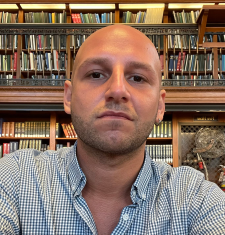
James Gregory (he/him/his)
Continuing the Mapping American Social Movements Project
This online project is developing data and publishing interactive maps about dozens of social movements that have influenced American life and politics during the 20th century. I am using mapping and visualization tools to reveal the complicated political geography of the left and derive new understandings of the historical role of social movements. The project began in 2015 and now includes maps and data for 18 social movements. The fellowship allows me to expand the scope and explore interactions between social movements.