Digital & Data Humanities Summer Fellowships
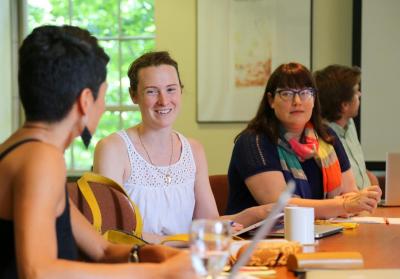
The Simpson Center offers annual summer fellowships for faculty and graduate students to pursue research projects that use digital technologies in innovative and intensive ways and/or explore the historical, social, aesthetic, and cross-cultural implications of digital cultures. The program has three primary goals:
- To animate knowledge—using rich media, dynamic databases, and visualization tools
- To circulate knowledge—among diverse publics
- To understand digital culture—historically, theoretically, aesthetically, and generatively
The Simpson Center gratefully acknowledges the support of a National Endowment for the Humanities Challenge Grant and the Andrew W. Mellon Foundation as well as many donors to the endowment which is underwriting these fellowships.
2026 - 2027 Summer Fellows




2017 - 2018 Digital Humanities Summer Fellow

Sarah Ross (she/her/hers)
The Poiesis of Image-Signs in Modernist Cinema
This project uses a new scholarly form of film criticism—the video essay—to visually connect the logic of collage, which became prevalent in the early 20th century avant-garde movements, to the “high modernist” filmmakers of 1960s and 1970s. Members across avante-garde movements such as Cubism, Dadaism, Futurism, and Surrealism proposed that their artist objectives were to “liberate men,” and this freedom could be attained primarily through a visual exchange whereby the work of art caused the viewer to see anew. This project examines in what way modernist cinema embodies and learns from this aesthetic legacy beyond its earlier incorporation into the work of directors and theorists of the 1920s and 30s.