Digital & Data Humanities Summer Fellowships
The Simpson Center offers annual summer fellowships for faculty and graduate students to pursue research projects that use digital technologies in innovative and intensive ways and/or explore the historical, social, aesthetic, and cross-cultural implications of digital cultures. The program has three primary goals:
- To animate knowledge—using rich media, dynamic databases, and visualization tools
- To circulate knowledge—among diverse publics
- To understand digital culture—historically, theoretically, aesthetically, and generatively
The Simpson Center gratefully acknowledges the support of a National Endowment for the Humanities Challenge Grant and the Andrew W. Mellon Foundation as well as many donors to the endowment which is underwriting these fellowships.
2026 - 2027 Summer Fellows



2018 - 2019 Digital Humanities Summer Fellow
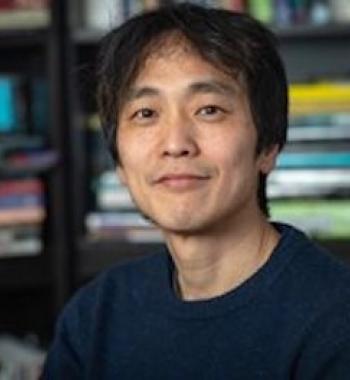
Jin-Kyu Jung (he/him/his)
Imagination Stations: Drawing, Drifting, Mapping
This collaboration with Ted Heibert explores new ways to imagine and present complex compilations of multi-modal data. The goal is to establish an interdisciplinary discourse at points of convergence between geographic visualization and mapping, art, and the digital humanities. We look at the ways that a dialogic approach to data generation and mapping might provide new possible ways to imagine geovisual conceptualization – visualization that preserves, represents, and generates a strongly nuanced, contextual, and deeply contingent representation of urban space and people. We focus particularly on developing a hybrid framework for integrating a range of digital forms of data, analysis, and representation often considered incompatible.