We are excited to share that the University of Washington has been awarded a grant from the Mellon Foundation to support a Sawyer Seminar focused on rethinking academic freedom, democracy, and the university through Indigenous and decolonial approaches to knowledge, art, and institutional governance. This project is co-led by UW faculty Jessica Bissett Perea (American Indian Studies), Ben Gardner (Interdisciplinary Arts & Sciences), and Tony Lucero (Comparative History of Ideas and Jackson School of International Studies). We warmly invite faculty, students, staff, and administrators across UW to participate in co-creating this project with us.
The seminar begins from a striking point on our own campus: a mural that depicts Washington being “set apart” from Oregon—a moment rooted in violence, dispossession, and the disruption of Coast Salish lands and relations. This artwork raises a larger question that guides our work: can universities shaped by colonial and imperial histories become spaces for building more just, accountable, and democratic forms of knowledge and governance?
By centering Indigenous principles of research creation, art making, and knowledge production, we seek to generate a new research and institutional agenda that can articulate epistemological, political, and aesthetic forms in democracy-enhancing ways. At the same time, this centering of Indigenous knowledge production offers the promise of modeling a form of academic freedom that is truly relational and emancipatory, not only for the benefit of Native scholars but for all our relations.
In doing so, we use decolonial approaches that both acknowledge the constraints of colonial influences and, more importantly, enact dialogical and relational forms of inquiry that make visible political horizons broader than those conventionally called liberal or conservative. To borrow from the Zapatistas, decolonial knowing allows us to move toward “a world where many worlds fit.”
This project will create spaces for difficult dialogues that can help build a governance culture that is not afraid to reckon with the inequities and injustices that are deeply interwoven into the university itself. One way we seek to accomplish this is by threading academic and administrative knowledge throughout our activities, seeking to take advantage of the skills of our colleagues who can productively juxtapose intellectual and institutional expertise.
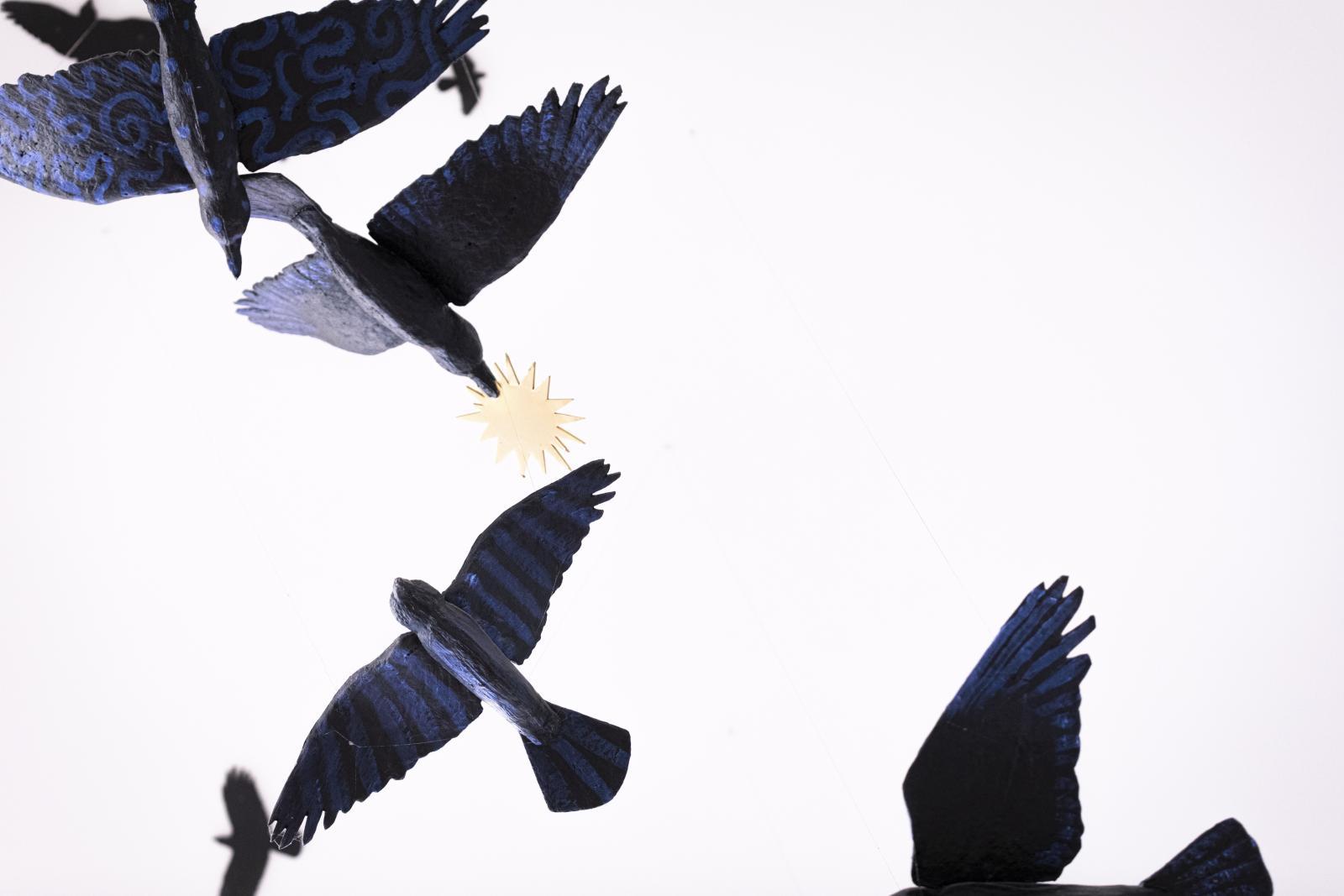
This project aims to support a culture of academic inquiry at the University of Washington that questions the historic formulation of academic freedom as grounded in liberal notions of individual freedom and knowledge production in specific academic fields. We engage artists and arts practitioners precisely because they often work between the intellectual and more emotive or performative ways of seeing, doing and knowing. For all transformative humanities work, the arts are central, for as Ta-Nehisi Coates puts it in his recent book, “the arts tell us what is possible and what is not, because, among other things, they tell us who is human and who is not.” Even more broadly, in the hands of creative thinkers like Colville artist RYAN! Fedderson and Kenyan sculptor Wangechi Mutu (both of whom have created pieces that are now part of the the life of our campus), art tells humans what we can learn from the more-than-human world. We invite artists to collaborate with faculty, students, staff, administrators, community organizations and leaders to help build spaces for critical dialogue and connection.
This Sawyer Seminar is not just a lecture series—it is a collaborative experiment in building a more just, reflective, and democratic university. We invite you to join us in shaping its conversations, activities, and directions.
Note: This article was edited on September 30, 2026 to reflect a change in the project title from "Not Apart: Indigenous Knowledges, Global Reciprocity, and the Art of Democracy" to "Not Apart: Indigenous Knowledges and the Art of University-Community Repair."