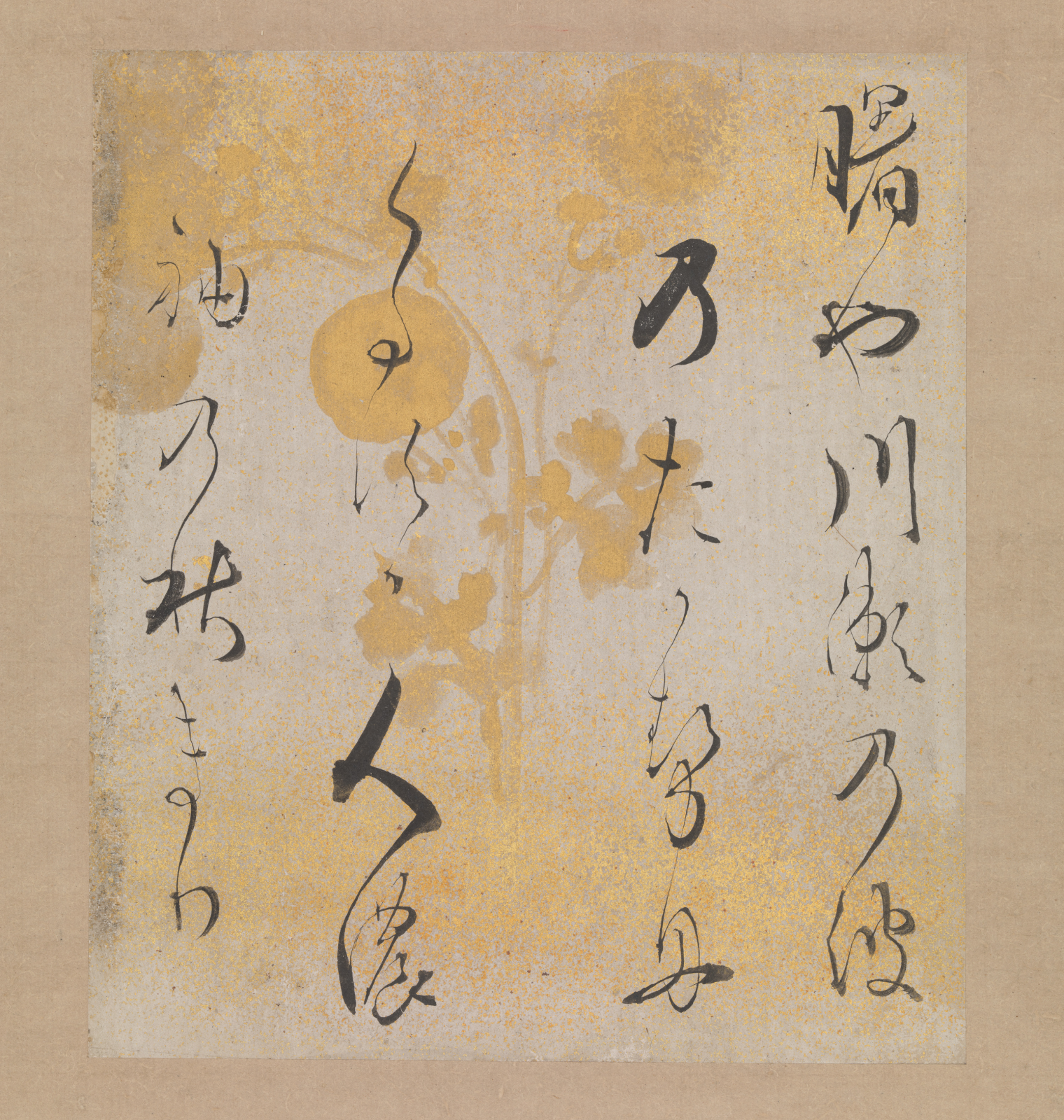
"The tool the team is developing will benefit scholars in history, literature, linguistics, art history, and religion, and help 'rewrite the textual history of premodern Japan.'"
Congratulations to Paul S. Atkins, who was recently awarded a transformational grant for the project that he spearheaded as a Simpson Center Digital & Data Humanities (D&DH) Fellow in the summer of 2025. Atkins (Professor, Asian Languages & Literature) specializes in the literature, drama, and culture of medieval Japan. His team was one of 19 selected from over 500 applicants to receive a Humanities and AI Virtual Institute (HAVI) award from Schmidt Sciences.
With their winning project, Atkins and his team are building an explainable AI system that reads classical Japanese cursive handwriting (kuzushiji) and recognizes which of several forms a human scribe chose for each sound. These choices, called jibo 字母, act like orthographic fingerprints. According to Atkins, existing AI tools for premodern Japanese erase these distinctions, so the patterns have never been studied at scale. He anticipates that the tool the team is developing will benefit scholars in history, literature, linguistics, art history, and religion, and help “rewrite the textual history of premodern Japan.” Atkins expects that the online tool will also be useful to scholars, students, and professionals who work in galleries, libraries, archives, and museums.
Of the HAVI award, Atkins says, “I doubt we would be receiving it without the help of the Simpson Center.” Our Digital & Data Humanities Summer Fellowship program encourages faculty and graduate students to engage digital and data technologies in innovative and intensive ways to further humanities and humanistic social science scholarship, and to reach broader publics. The program incubates promising ideas, enabling projects to grow and become viable submissions for external grant competitions. Atkins and his two UW graduate student collaborators, Herman Chau (Mathematics) and Michael R. Zeng (Mathematics) held D&DH fellowships in the summer of 2025.
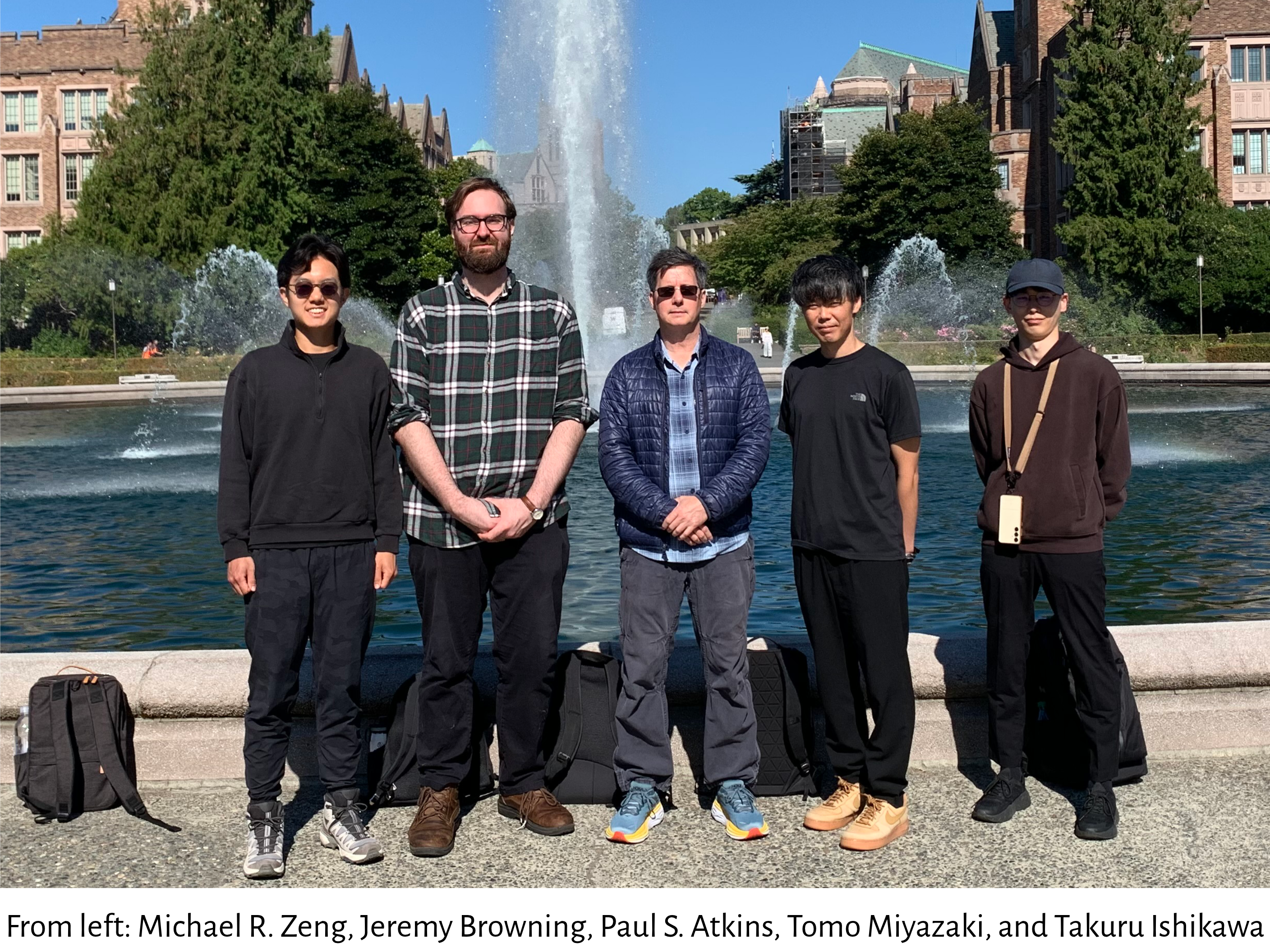
Following their time as D&DH fellows, Atkins, Chau, and Zeng received two awards for their project and paper, “Deriving Orthographic Data from Classical Japanese Texts with Machine-Learning Methods,” at Jinmonkon 2025, the Information Processing Society of Japan’s Computers and the Humanities annual symposium, a premier venue for research on digital humanities in Japan. The paper received the Best Paper Award, and Chau, its first author, received the Student Encouragement Award. The HAVI team now includes Atkins, Zeng, and Jeremy Browning (MA student, Japanese) at UW, and Associate Professor Tomo Miyazaki and graduate students Ryo Kondo and Takuru Ishikawa at Tohoku University.
Atkins was not the only UW faculty member to receive a HAVI award. Melanie Walsh and Ben Lee, both Assistant Professors in UW’s Information School, received an award together with colleagues from Boston University and the American Institute of Physics. While their project, Toward a Multimodal Understanding of 250 Years of Government Documents, did not receive earlier support from the Simpson Center, Walsh has received Simpson Center funding for other projects as both a D&DH Summer Fellow and as a leader of several collaborative research projects.
The Simpson Center is committed to supporting a wide range of innovative scholarship. We are proud to see faculty members and graduate students bring their expertise in the humanities and humanistic social sciences to bear on the development of machine learning tools for research and critical analysis.
Image Credit: Hon'ami Kōetsu (1558–1637), shikishi with a waka, early 17th century. Ink on gold-decorated paper. The Metropolitan Museum of Art, Mary and Cheney Cowles Collection, Gift of Mary and Cheney Cowles, 2018 (2018.853.10).